By Gabrielle St. Pierre
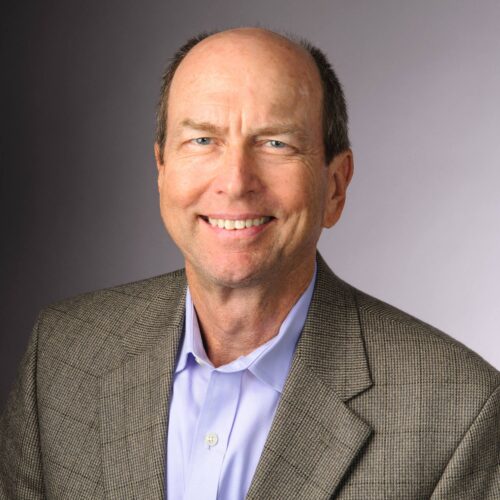
As an undergraduate student at WashU, Robert G. Harmon, AB ’66, MD ’70, knew he was interested in the health sciences. He continued on to medical school after earning his bachelor’s degree, following in the footsteps of his older brother and father, a general surgeon and family physician and surgeon, respectively. It wasn’t until his internal medicine residency at the University of Colorado Anschutz School of Medicine, however, that he learned of a field that was unfamiliar but exciting to him: public health.
“I didn’t even know that training and working in public health was an option,” Harmon says. “Once I discovered the field, I thought ‘That’s what I’d like to do.’” With the encouragement of a mentor, Harmon added a residency in general preventive medicine and public health, along with a Master of Public Health degree from Johns Hopkins University.
Now, WashU students will have a more direct path into the profession thanks to the newly established WashU Bursky School of Public Health and the generosity of donors like Harmon, who recently made an estate commitment to establish the Dr. Robert Harmon Endowed Public Health Scholarship to support graduate students at the school.
The scholarship will be awarded with preference given to those enrolled in the 3-2 program, which allows students to complete a bachelor’s degree and a Master of Public Health in five years. “I hope the scholarship attracts very bright, highly qualified students who can either discover public health through it or take their study of public health to the next level,” Harmon says. The scholarship will continue as the program shifts from a 3-2 to a 4-1 model beginning in fall 2027, allowing more undergraduate students to participate.
The Bursky School of Public Health was launched in 2025 as WashU’s first new school in 100 years. It aims to promote health through excellence in interdisciplinary science and scholarship, a future-ready education curriculum, and a commitment to local and global impact.
Harmon, who serves on the Bursky School of Public Health National Council, says he was thrilled when the new school was announced. “It’s a huge undertaking, but Dean Galea is a tireless leader and is moving things forward rapidly and with intention,” he says. Having previously served on the Institute for Public Health National Council, Harmon saw firsthand how WashU planted the seed for the new school and has been pleased to watch it grow.
Beyond his volunteer leadership, Harmon has stayed connected to WashU through his medical school classmates. They formed a close bond as students, one they’ve maintained through reunions and the Class of 1970 Scholarship, which benefits WashU Medicine students. “I wanted to do my part alongside my classmates to ease the burden of educational debt for medical students,” Harmon says. “This led me to ask myself, ‘What am I going to do for the Bursky School of Public Health?’”
According to Harmon, the school’s creation is significant because it provides students with new opportunities to study and work in the field of population health. “WashU saw the need and responded,” he says. Nearly half of all Arts & Sciences students arrive at WashU interested in pre-medical studies. However, only around 16-18% of those students go on to become physicians. That leaves a substantial group of students with an interest in the field without a clear academic pathway. The Burksy School of Public Health helps fill that gap.
“It would have been wonderful to have the school when I was a student,” Harmon says. “It’s especially important that it exists now, at a time when public health is being challenged at the state and federal levels. We must crank up public support. And that’s what’s happening at WashU.”
Harmon hopes his scholarship will develop public health leaders in both the public and private sectors, just as his professional roles have spanned both. His career has included key positions during significant public health crises, including the HIV/AIDS epidemic, in which he oversaw the launch of the federal Healthy Start and the Ryan White HIV/AIDS programs. Most recently, Harmon served nine years until his retirement in 2022 at Cerner Corp., a global electronic health record company. He has authored more than 70 publications dealing with health information technology, quality improvement, managed care, primary care, public health administration, and health policy.
“It is an extremely interesting, broad, and rewarding career,” he says. “We need strong recruits for the field. The Bursky School of Public Health will help with that.”
For more information on how you can support the work of WashU through a planned gift, please contact the Office of Planned Giving. With you, we can make a world of difference.
plannedgiving@wustl.edu | 800.835.3503 | 314.935.5373
Answer to this issue’s trivia question
Question: If the Bursky School of Public Health is the first school launched at WashU in 100 years, then the last new school opened in 1925. Which school was that?
Answer: The School of Social Work
The Brown School of Social Work was established in 1925.